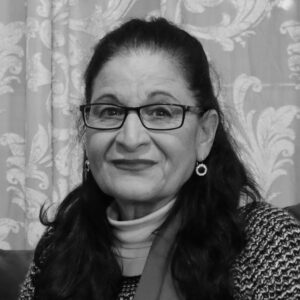
She is known at home and abroad for her efforts against social and political taboos, and for her courageous books. Novels intimate only in appearance: the intertwined stories of relationships, often dramatic, hold a thousand references that tell more than many reportages, what it is like to live under dictatorship. As in “In her mirrors” an excellent translation from Elena Chiti, published in Beirut, and so far only distributed clandestinely in Syria.
“On the recording, there were pictures of young men who had received weapon training, were singing martial songs, listened to sermons and roared battle cries. It was like watching us back in the camps of the Puritan movement. Nineteen men brought death and destruction on this September day, and if I had stayed in the movement and let myself be persuaded to go to Afghanistan, I could have easily become the twentieth. I could have been an accomplice in one of history’s greatest crimes against humanity”
She is now one of the best known faces of the Syrian revolt. The novelist and journalist Samar Yazbek left her country in July 2011. She now lives in Paris. Despite her belonging to the Alawite community, the Shia minority to which also belongs the family al-Assad, she joined the protest against the Regime.
The two main cities, Damascus and Aleppo have not embraced the protests. Why?
First, this is where the social classes that have benefited most from the regime are concentrated. But if they see that their interests are threatened, the merchant bourgeoisie will also eventually take a stand against Al-Assad. The country is experiencing a very serious economic crisis. The second reason is that all public places are occupied by security forces to prevent any gathering. Power is obsessed with these two cities. There are small daily demonstrations in the capital, but they are nipped in the bud.